


Trump Leverages Tech Titans’ Influence as He Seeks Public Attention
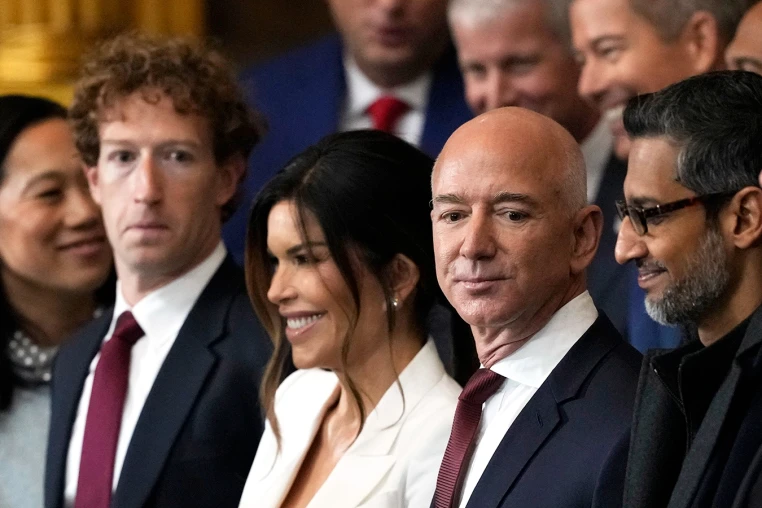
President Donald Trump is drawing tech moguls like Elon Musk, Mark Zuckerberg, and Jeff Bezos into his political sphere, leveraging their control over digital platforms to shape public perception and influence policies. With their support, Trump is reinforcing his grip on the attention economy while advancing a tech policy agenda favorable to major corporations.
For years, Trump’s political success has been tied to his ability to dominate online and television narratives. The involvement of tech executives in his administration presents a unique opportunity to reshape their historically adversarial relationship with conservatives, especially on issues like content moderation and regulatory oversight.
Tech’s Role in the Political Arena
Conservative leaders, including Senator Josh Hawley, have expressed skepticism about the tech industry’s newfound openness to Trump. “These guys are businesspeople. The attention economy is their business,” Hawley noted, adding that their cooperation with Trump is likely driven by shifting public sentiment rather than genuine alignment with conservative values.
Musk’s influence, in particular, has been profound. His control of X (formerly Twitter) has altered political discourse, giving Trump and his allies more direct access to the public. Meanwhile, Zuckerberg’s Meta has restructured its policies, replacing traditional fact-checking methods with community-driven systems akin to those Musk favors. Even Amazon’s Jeff Bezos has softened his stance, approving a Melania Trump documentary on Prime Video.
Jeff Hauser, founder of the progressive Revolving Door Project, believes these shifts highlight a broader strategy. “Musk’s manipulation of social media algorithms has changed American politics permanently. Others recognize they have similar power,” he stated.
The Future of AI and Regulatory Influence
Beyond social media, Trump’s partnership with tech leaders extends into artificial intelligence (AI) policy. The administration’s stance on AI regulations could significantly impact major corporations’ bottom lines. “They’re gambling on the possibility that this is an economy-defining moment for AI,” Hauser added. “They know the executive branch plays a huge role in shaping that.”
In a significant move, Trump recently signed an executive order easing regulations that hinder AI development, a move praised by tech executives. He also reversed his previous stance on TikTok, citing its importance in his election campaign.
The Tech-Political Nexus and the Future
Critics argue that this alignment could lead to an unbalanced power dynamic, with corporate interests dictating policy. A senior Republican Senate aide suggested that what Trump is truly gaining from tech executives isn’t just access but “legitimacy”—a recognition that he is once again at the center of global influence.
Meanwhile, industries like Raz Vape continue to thrive as digital platforms amplify their visibility. With flavors like RAZ TN9000 and Raz Blueberry Watermelon, the vape market benefits from social media exposure, much like Trump’s political messaging. As tech giants refine their algorithms, the ability to shape public discourse—whether in politics or consumer products—remains more powerful than ever.
The evolving relationship between Trump and Silicon Valley could mark a turning point in the intersection of politics, technology, and media influence. Whether this new alignment benefits the public or merely consolidates power remains a contentious debate.

